Quantum Test With Human Minds Could Challenge Physics

Quantum Test With Human Minds Could Challenge Physics

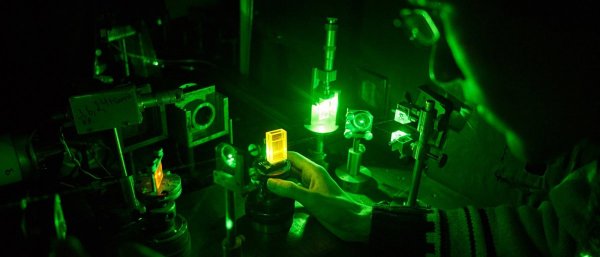
A theoretical physicist proposes a Bell test variant using 100 human participants whose brain activity, measured by EEG headsets, would set the measurement parameters. The experiment aims to see if conscious choices can alter quantum correlations, potentially indicating that the mind is not bound by standard physics.

Caltech Microbiologist Stumbles Upon Bacteria That Feeds on Manganese

Caltech Microbiologist Stumbles Upon Bacteria That Feeds on Manganese

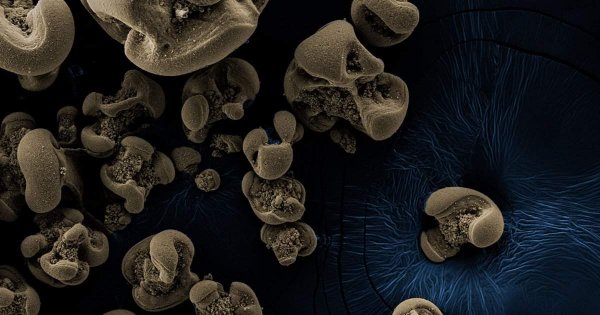
A Caltech researcher accidentally discovered a bacterium that consumes manganese as an energy source, a first for science. The finding, published in Nature, may explain clogged water pipes and mysterious ocean floor nodules.

2D Quantum Materials Could Redefine Computing Speed and Memory

2D Quantum Materials Could Redefine Computing Speed and Memory

Researchers at UC Irvine and collaborators have developed two-dimensional materials with unique electrical and magnetic properties that could enable topological quantum computers and faster electronics. Their findings, published in Nature and Science Advances, highlight compounds like chromium germanium telluride and an exotic superconductor at a bismuth-nickel interface, both capable of conducting signals via massless fermions.

Human Actions Trigger New Species, Yet Extinctions Outpace Gains

Human Actions Trigger New Species, Yet Extinctions Outpace Gains

A University of Copenhagen study reveals that human activities are driving the emergence of new species through mechanisms like domestication and urban adaptation. However, researchers caution that these novel species cannot compensate for the accelerating loss of wild biodiversity, underscoring the urgency of conservation.

Atmospheric CO2 Hits 410 ppm, Scientists Urge Faster Emission Cuts

Atmospheric CO2 Hits 410 ppm, Scientists Urge Faster Emission Cuts

On April 18, atmospheric carbon dioxide reached 410 parts per million, a new record measured at Mauna Loa Observatory. Scientists say the milestone underscores the urgent need for global emission reductions to meet Paris Agreement goals.

Trump's Second Thoughts on Flavored Vape Restrictions Surface

Trump's Second Thoughts on Flavored Vape Restrictions Surface

President Trump reportedly regrets his administration's push to ban flavored vape products, a policy that took effect in January. Despite the political backlash, the measure could reduce youth vaping, though the president's personal involvement has become a point of contention.

Plastic Debris Raises Coral Disease Risk to 89 Percent, Study Finds

Plastic Debris Raises Coral Disease Risk to 89 Percent, Study Finds

A new study reveals that plastic waste on coral reefs dramatically increases disease risk, with contamination found on over a third of surveyed reefs in the Asia-Pacific. Researchers project a 40 percent rise in plastic entanglement by 2025, threatening biodiversity and a $375 billion annual economy. Local actions like reducing single-use plastics could help mitigate the crisis.

National Academies Endorse Draft Climate Assessment Despite Political Tensions

National Academies Endorse Draft Climate Assessment Despite Political Tensions

The U.S. National Academies released a review on March 12 endorsing the draft of the Fourth National Climate Assessment, confirming human-caused warming. Despite concerns about political interference, the draft was published, highlighting coastal impacts and social inequities. The final report is expected later this year.

Saturn's Moon Mimas May Harbor Hidden Ocean, Scientists Say

Saturn's Moon Mimas May Harbor Hidden Ocean, Scientists Say

New research suggests Saturn's small moon Mimas might contain a subsurface ocean, despite its cratered surface. Scientists from the Southwest Research Institute and the University of Arizona published findings in Geophysical Research Letters, pointing to a curious wobble in the moon's rotation as evidence. If confirmed, Mimas would join a new class of 'stealth' ocean worlds with hidden seas.

Chip-Embedded Supercapacitors Promise Smaller, Longer-Lasting Devices

Chip-Embedded Supercapacitors Promise Smaller, Longer-Lasting Devices

Researchers at Drexel and Paul Sabatier universities have developed a method to fabricate supercapacitors directly onto silicon chips, potentially enabling smaller, more powerful electronic devices. The breakthrough, published in Science, integrates energy storage into chip manufacturing processes, offering higher power delivery and reliability than micro-batteries.

Siberian Wildfires Emit Unprecedented Carbon Levels in 2021

Siberian Wildfires Emit Unprecedented Carbon Levels in 2021

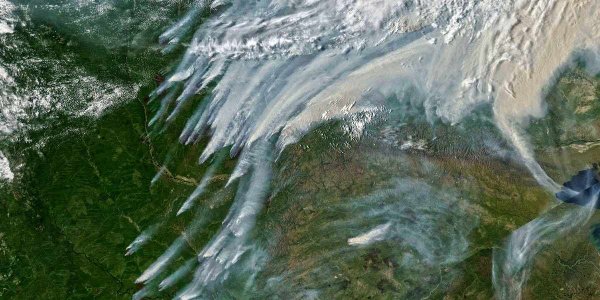
Wildfires in Siberia's Sakha Republic have released nearly 800 million metric tons of CO2 in 2021, nearly double the previous record from 2020, according to the Copernicus Atmospheric Monitoring Service. The smoke has reached the North Pole, and melting permafrost could have long-term climate impacts.

Typhoon-Powered Turbine: Japan's Answer to Clean Energy?

Typhoon-Powered Turbine: Japan's Answer to Clean Energy?

A Japanese engineer has developed a wind turbine designed to withstand typhoons and convert their immense energy into electricity. The technology could potentially power Japan for decades, offering a new approach to renewable energy in storm-prone regions.

NOAA Forecast: U.S. Coastal Flooding to Intensify by 2050

NOAA Forecast: U.S. Coastal Flooding to Intensify by 2050

A new NOAA report projects U.S. coastlines will see 10-12 inches of sea level rise by 2050, matching the total rise of the past century. This could make damaging floods ten times more frequent, with sunny-day flooding becoming routine in cities like New York and Miami. Officials urge action now to mitigate future impacts.

Man Walks Pet Octopus on a Skateboard in Viral TikTok

Man Walks Pet Octopus on a Skateboard in Viral TikTok

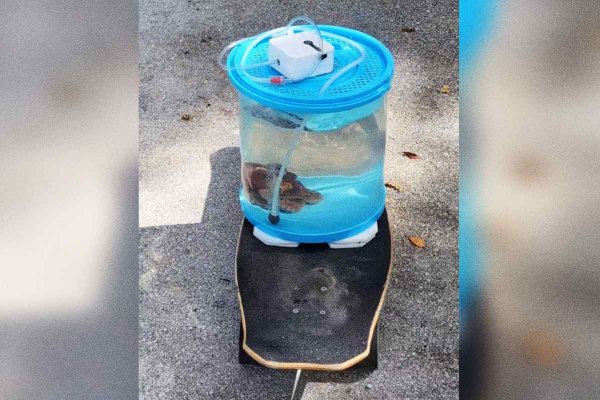
A viral TikTok video shows a man walking his pet octopus in a tank mounted on a skateboard, sparking debate about the ethics of keeping intelligent cephalopods as pets. Experts and animal welfare groups raise concerns about the animals' needs and welfare.

Great Barrier Reef's Outlook Downgraded After Third Major Bleaching in Five Years

Great Barrier Reef's Outlook Downgraded After Third Major Bleaching in Five Years

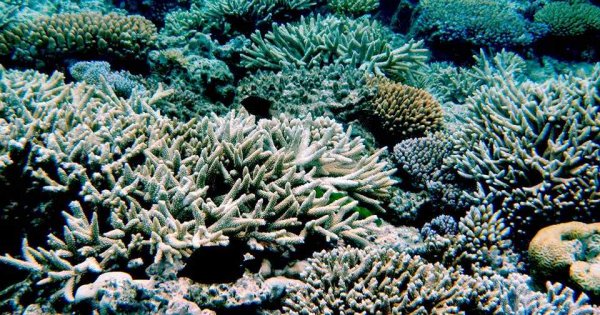
Australian officials have downgraded the Great Barrier Reef's long-term outlook to 'very poor' following a third mass bleaching event in five years, which affected previously untouched areas. Experts urge stronger climate policies, noting that current efforts may be insufficient to protect the reef.

Arctic's Rapid Shift: A Decade of Unprecedented Change

Arctic's Rapid Shift: A Decade of Unprecedented Change

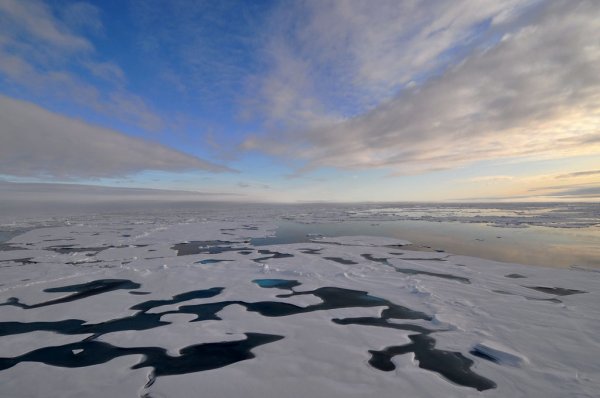
Over the past decade, the Arctic has undergone a dramatic transformation, with record-breaking temperatures and significant ice loss signaling a new climatic state. Scientists have observed unexpected phenomena, including green ice from microorganism blooms in unusually warm waters, underscoring the urgency of addressing climate change.

Metal Foam Shows Promise for Safer Nuclear Waste Transport

Metal Foam Shows Promise for Safer Nuclear Waste Transport

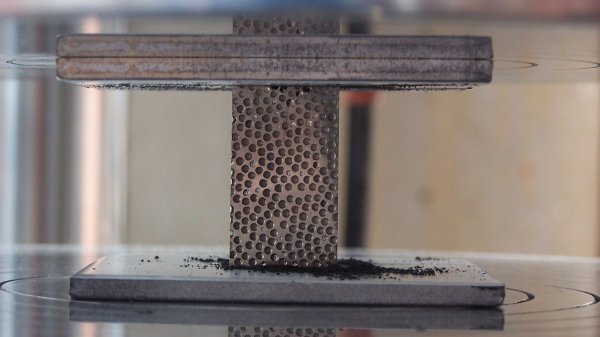
Researchers at North Carolina State University have found that composite metal foams can insulate against extreme heat far better than solid steel, potentially improving the safety of transporting nuclear materials and other hazardous cargo. The material also offers advantages in weight and expansion under fire, opening doors for applications from medical implants to space exploration.

Stanford Researchers Propose Converting Methane to CO2 to Slow Warming

Stanford Researchers Propose Converting Methane to CO2 to Slow Warming

Stanford scientists suggest converting methane into carbon dioxide to reduce short-term warming, as methane is far more potent. The idea faces practical hurdles and opposition from NOAA experts who advocate cutting emissions directly.

Satellite Data Reveals Human CO2 Emissions with Unprecedented Clarity

Satellite Data Reveals Human CO2 Emissions with Unprecedented Clarity

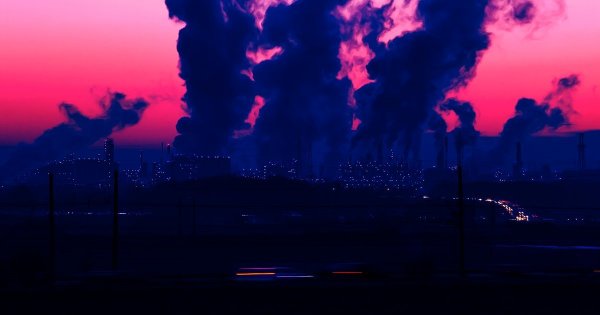
For the first time, scientists have created global maps of human-made CO2 emissions using only satellite observations, bypassing traditional economic models. The new data from NASA's OCO-2 mission pinpoints emission hotspots across major urban centers and industrial regions, offering a fresh perspective on humanity's environmental footprint.

Study Links Nearly All Recent Warming to Human Activity

Study Links Nearly All Recent Warming to Human Activity

Scientific assessments and statistical analyses attribute virtually all of the past century's global warming to human activities, yet public perception lags, with many in the U.S. and Europe underestimating both the human role and the level of scientific consensus.