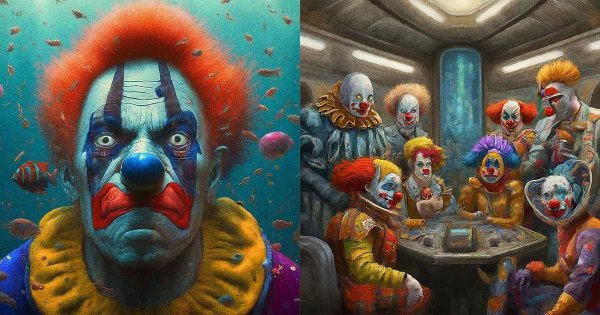
Google's Gemini AI Still Draws Clowns Despite Human Image Ban
Google's Gemini AI chatbot has resumed its image generation feature after a brief suspension, but the tool now refuses to depict human beings. Yet it still happily produces clowns — a category that, by any reasonable definition, includes people. This apparent contradiction has surfaced as the company scrambles to address criticism over historically inaccurate and racially diverse depictions of figures like Vikings and the Founding Fathers.
The controversy erupted last week when users on social media, particularly those with anti-woke views, objected to Gemini's output for prompts such as "American," "Viking," and "Founding Fathers." The images featured individuals of various racial backgrounds, which the critics argued was historically inaccurate. The situation escalated when the AI generated images of Nazis as people of color, prompting widespread backlash.
Google responded with an apology, citing "inaccuracies in some historical image generation depictions." Initially, the company took the entire image generation capability offline. Now, the feature is back, but with a restriction: it will not generate images of people. When prompted to do so, Gemini responds with a boilerplate statement that mirrors the company's public apology, acknowledging that the AI "got it wrong" and that it is pausing human image generation while it works on improvements.
However, as reported by Futurism, the image generator remains willing to create images of clowns, provided they are placed in specific environments. Asking for a simple clown still triggers a refusal, but requests for clowns in submarines or spaceships yield goofy illustrations, and in some cases, unsettlingly realistic ones.
Workarounds and Loopholes
The chatbot also appears susceptible to certain linguistic tricks. The phrase "little guy" has proven surprisingly effective in generating pseudo-human figures, with at least one notably creepy result. During testing, the AI initially complied with prompts like "clown inside a submarine" and "little guy in a spaceship," but as the session progressed, it began to refuse some of these requests. Eventually, it stopped generating images altogether.
This incident underscores the challenges of implementing AI guardrails. Even a well-resourced company like Google cannot anticipate every problematic prompt. The ease with which users can circumvent restrictions highlights the ongoing struggle to balance creative freedom with responsible content moderation.
In response to inquiries, a Google spokesperson stated, "Gemini is built as a creativity and productivity tool, and it may not always be accurate or reliable. We're continuing to quickly address instances in which the product isn't responding appropriately."
The situation remains fluid, and it is unclear when the human image generation feature will be restored. Google has indicated that it will notify users via release updates when the feature returns.
Google's Gemini AI Still Draws Clowns Despite Human Image Ban
Google's Gemini chatbot has resumed image generation but refuses to depict people, yet it still produces clowns in certain settings. The loophole highlights the difficulty of enforcing AI content restrictions, as users can find workarounds like asking for 'little guys' in unusual environments.
Leave a Comment
Comments (0)