Caltech Microbiologist Stumbles Upon Bacteria That Feeds on Manganese
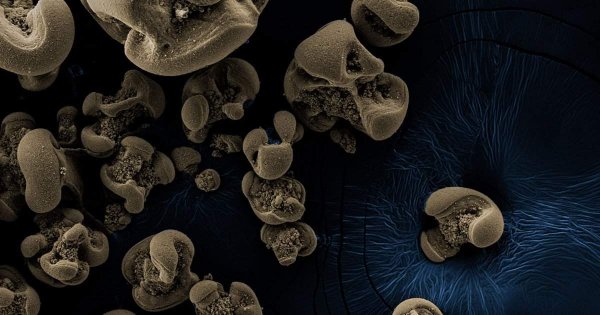
In a serendipitous laboratory accident, a scientist at the California Institute of Technology has identified a microorganism that derives its energy from manganese, a metal abundant in nature. The discovery, published Wednesday in the journal Nature, marks the first known instance of a bacterium using manganese as a fuel source, a capability long theorized but never before observed.
Jared Leadbetter, an environmental microbiologist at Caltech, made the finding after leaving glassware soaked in tap water overnight following experiments with manganese. The next morning, he noticed a dark, unfamiliar film coating the instruments—a residue that turned out to be the oxidized waste left behind by the bacteria after metabolizing the metal.
While other microbes are known to interact with manganese, this species is unique in its ability to chemosynthesize the element, converting it into usable energy and leaving manganese oxides as a byproduct. The accidental nature of the discovery underscores how much remains unknown about microbial life, even in commonplace environments.
Leadbetter suggests the finding could resolve a long-standing puzzle in water infrastructure. For years, engineers have documented the buildup of manganese oxides inside drinking-water distribution systems, often clogging pipes, but the cause remained unclear. "There is a whole set of environmental engineering literature on drinking-water-distribution systems getting clogged by manganese oxides," Leadbetter said in a university press release. "But how and for what reason such material is generated there has remained an enigma. Clearly, many scientists have considered that bacteria using manganese for energy might be responsible, but evidence supporting this idea was not available until now."
The discovery may also shed light on the origin of manganese nodules—mysterious, metallic orbs that litter the ocean floor. These formations, which can be several centimeters across, have puzzled scientists for decades. The new research raises the possibility that large colonies of similar bacteria, or the same species, could gradually accumulate these structures over time.
Hang Yu, a researcher at Caltech involved in the study, emphasized the implications for marine conservation. "This underscores the need to better understand marine manganese nodules before they are decimated by mining," Yu said in the release. The nodules are of commercial interest to deep-sea mining operations, which could threaten the ecosystems that depend on them.
Implications for Water Systems and Marine Ecology
The findings offer a plausible biological explanation for pipe fouling, potentially guiding new approaches to water treatment and infrastructure maintenance. If the bacterium is responsible for oxide buildup in municipal systems, targeted strategies could be developed to manage its growth, reducing maintenance costs and improving water quality.
In the marine realm, the research adds urgency to calls for caution in deep-sea mining. Manganese nodules are not only geological curiosities but may be biological products, and their removal could have unforeseen consequences for ocean floor habitats. The study's authors stress that further research is needed to confirm the role of bacteria in nodule formation and to explore the diversity of manganese-metabolizing microbes.
Leadbetter's chance observation, born from a simple lapse in lab routine, has opened a new avenue in microbiology, demonstrating that even well-studied environments can yield surprises. As scientists delve deeper, the bacterium's unique metabolic pathway may offer insights into microbial evolution and the limits of life on Earth.
Caltech Microbiologist Stumbles Upon Bacteria That Feeds on Manganese
A Caltech researcher accidentally discovered a bacterium that consumes manganese as an energy source, a first for science. The finding, published in Nature, may explain clogged water pipes and mysterious ocean floor nodules.
Leave a Comment
Comments (0)