Human Actions Trigger New Species, Yet Extinctions Outpace Gains
Human activities are not only driving species to extinction but also triggering the emergence of new ones, according to a new study from the Center for Macroecology, Evolution and Climate at the University of Copenhagen. The research, published in a leading scientific journal, documents how mechanisms such as accidental introductions, domestication, and adaptation to urban environments are accelerating evolutionary change, sometimes leading to entirely new species.
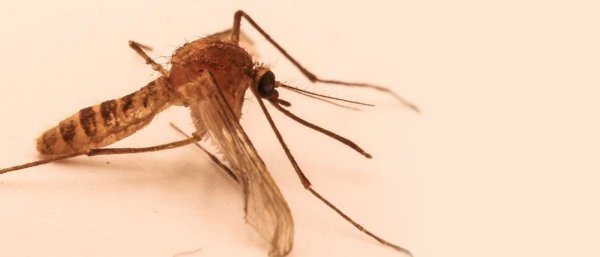
The study arrives against a backdrop of alarming biodiversity loss. Over the past five decades, the Western Black Rhinoceros, Pyrenean Ibex, and Javan Tiger have all vanished, casualties of human encroachment and exploitation. Yet the same forces that eliminate species can also, in rare cases, create them. The researchers highlight the example of the common house mosquito, which colonized the London Underground and evolved into a distinct subterranean population now known as the London Underground Mosquito. These insects can no longer interbreed with their above-ground relatives, effectively making them a new species.
Lead author and Postdoc Joseph Bull of the University of Copenhagen acknowledges the paradoxical nature of these findings. "The prospect of 'artificially' gaining novel species through human activities is unlikely to elicit the feeling that it can offset losses of 'natural' species," he said. "Indeed, many people might find the prospect of an artificially biodiverse world just as daunting as an artificially impoverished one." His remarks underscore a central tension: while human actions can spur speciation, the resulting organisms often occupy narrow ecological niches and lack the resilience of long-established wild species.
Why New Species Can't Replace Extinct Ones
The study emphasizes that newly evolved species cannot simply substitute for those lost to extinction. Extinct species, such as the Pyrenean Ibex, played unique roles in their ecosystems, and their disappearance leaves gaps that no newcomer can fill. Moreover, the pace of human-induced extinction far outstrips the rate at which new species emerge, making it impossible for speciation to keep up with biodiversity decline.
Researchers also point to the broader implications for conservation policy. If human activities are both a cause of extinction and a driver of speciation, then conservation efforts must account for this dual impact. The study calls for a nuanced approach that recognizes the value of both natural and human-influenced biodiversity, while still prioritizing the protection of endangered species and habitats.
The findings add a new dimension to the debate over humanity's role in shaping the planet's biological future. As urban environments expand and climate change alters habitats, the potential for further human-induced speciation may grow. Yet, as the study makes clear, this does not lessen the urgency of conservation. The loss of a species is irreversible, and the emergence of new ones, however fascinating, cannot compensate for the erosion of the natural world.
Human Actions Trigger New Species, Yet Extinctions Outpace Gains
A University of Copenhagen study reveals that human activities are driving the emergence of new species through mechanisms like domestication and urban adaptation. However, researchers caution that these novel species cannot compensate for the accelerating loss of wild biodiversity, underscoring the urgency of conservation.
Leave a Comment
Comments (0)