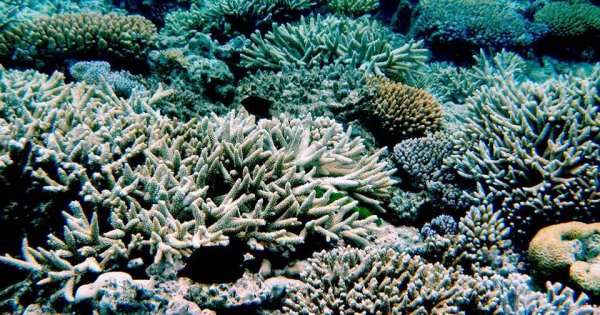
Great Barrier Reef's Outlook Downgraded After Third Major Bleaching in Five Years
The Great Barrier Reef's long-term health has been officially downgraded to "very poor" by Australian authorities, following the third mass coral bleaching event to strike the region within half a decade. The announcement, reported by Agence France-Presse, underscores the accelerating toll of climate change on one of the planet's most biodiverse marine ecosystems.
This latest bleaching episode, confirmed by the Great Barrier Reef Marine Park Authority, is notable for its geographic reach. Unlike the 2016 and 2017 events, which were already severe, the current bleaching has caused "moderate or severe" damage in areas that had previously escaped unscathed. That expansion into previously resilient zones has alarmed scientists and conservationists, who see it as evidence that the reef's natural recovery mechanisms are being overwhelmed.
The downgrade in outlook is not a symbolic gesture; it reflects a sober assessment of the reef's ability to withstand rising sea temperatures. The Marine Park Authority, which is responsible for managing the reef, has been monitoring the situation closely. Its updated prognosis paints a grim picture for the future of the 2,300-kilometer-long ecosystem, which supports thousands of marine species and contributes billions to Australia's economy through tourism and fishing.
Why the Latest Bleaching Is Different
The 2020 event is particularly troubling because of its breadth. While previous bleaching episodes were concentrated in the northern and central sections of the reef, this one has affected a wider swath, including southern regions that had shown resilience in the past. This suggests that the thermal stress is becoming more uniform across the reef, leaving fewer safe havens for coral communities.
Marine biologists have long warned that repeated bleaching events, occurring at intervals too short for corals to recover, could lead to permanent ecosystem collapse. The current situation appears to be validating those fears, as the reef's ability to rebound is increasingly compromised.
Australia's Climate Commitments Under Scrutiny
In response to the crisis, Australian officials have pointed to the country's progress on emissions reductions, claiming it has exceeded its targets under the Paris climate agreement. However, experts interviewed by AFP argue that such efforts are insufficient to address the scale of the threat. Shani Tager of the Australian Marine Conservation Society called for "urgent need for reef-safe climate policies," emphasizing that current measures are not aligned with the pace of environmental change.
The disconnect between government claims and expert assessments highlights a growing tension between economic priorities and environmental imperatives. Australia, as one of the world's largest coal exporters, faces significant pressure to balance its fossil fuel industry with the need to protect its natural heritage.
The Great Barrier Reef is not just an ecological treasure; it is also a cultural and economic cornerstone. Its decline has implications for Indigenous communities, tourism operators, and the broader Australian public. The repeated bleaching events serve as a stark reminder that climate change is not a distant threat but a present-day reality with tangible consequences.
As the world grapples with the challenges of reducing greenhouse gas emissions, the fate of the Great Barrier Reef stands as a litmus test for global commitment to environmental stewardship. The reef's deteriorating condition is a warning that current trajectories are unsustainable, and that more decisive action is needed to avert further damage.
Great Barrier Reef's Outlook Downgraded After Third Major Bleaching in Five Years
Australian officials have downgraded the Great Barrier Reef's long-term outlook to 'very poor' following a third mass bleaching event in five years, which affected previously untouched areas. Experts urge stronger climate policies, noting that current efforts may be insufficient to protect the reef.
Leave a Comment
Comments (0)